Ask ten mobile detailers what a full detail costs and you will hear a spread that ranges from a simple wash-and-vac at a bargain rate to a multi-day correction and coating package that rivals a mortgage payment. Both can be fair prices. The spread reflects time, skill, materials, risk, and the reality that mobile detailing folds logistics into the work. Pricing is not a single number, it is a set of decisions rooted in condition, goals, and constraints.
What follows is a field-level look at how mobile detailing prices get built. I will unpack how vehicle size, contamination, and finish goals change the math, why ceramic coating quotes vary so widely, where headlight restoration and wheel coating fit, and how add-ons stack without turning into a nickel-and-dime circus. I will also fold in some hard-earned lessons from running crews at On the Spot Mobile Detailers, where site conditions and client expectations have taught us as much as any product sheet.
The variables that actually move the number
A price is the sum of time, materials, overhead, and risk. That sounds tidy, but each bucket hides messy nuance.
Time is the big lever. A compact sedan with light dirt might take two hours for a decontamination wash and interior refresh. A full-size SUV with pet hair embedded in the cargo carpet, pine sap on the roof rails, and brake dust caked on intricate wheels can triple that. Time also swings on the finish target. A basic paint enhancement aims to improve gloss and reduce haze. True paint correction, by contrast, chases measured defect removal with multiple polishing steps and exacting inspection.
Materials scale with the job. A standard wash uses ounces of pH-balanced shampoo, a few towels, and a drying aid. Add iron remover, clay media, IPA wipe-downs, and specialized polishes, and your chemical cost can multiply. Ceramic coating, interior coating, and wheel coating introduce high-ticket consumables with shelf life and cure risks.
Overhead for mobile operations includes the truck or van, water reclamation gear where required, a generator for reliable power, insurance, and wages for travel time. It also includes the time lost to site setup and teardown. A tight urban garage with low light and fussy HOA rules can add 30 minutes on both ends that a shop rarely faces.
Risk is often underpriced by newcomers. Working around high-end trim, delicate soft-top materials, or oxidized gelcoat on a boat means a mistake has real cost. Coating in poor conditions increases the risk of high spots that must be corrected. Pricing should reflect the potential for rework and the skill set needed to avoid it.
How mobile detailing packages are usually structured
Most operators bundle services into tiers, then layer add-ons. The tier names vary, but the shapes are similar.
An entry wash and interior tidy covers a thorough hand wash, wheel faces, door jambs, vacuum, wipe-down of touch points, and glass. It is priced to be accessible, it preserves resale value, and it is the right fit for vehicles that are maintained often.

A mid-tier detail adds chemical decontamination and clay, deep interior work that includes carpet and mat extraction if warranted, a one-step polish for paint enhancement, and a short-term sealant. Think of it as a reset for a daily driver that has drifted from maintenance mode.
A top-tier correction and protection service centers on paint correction and a longer-term protection, usually a ceramic coating. It may include interior coating for high-touch surfaces and a wheel coating for brake-dust-heavy vehicles. It requires controlled conditions, more time, and more post-service guidance.
On the Spot Mobile Detailers tends to customize within these frameworks rather than enforce rigid bundles. A minivan that never sees a garage might need an interior-heavy package twice a year and only a simple wash outside of that. A garaged weekend car on soft paint might need a gentle enhancement and a high-quality paste wax rather than an aggressive correction.
Vehicle size, complexity, and the hidden time sinks
You can predict a third of the price simply by the vehicle category. Sedans, coupes, and small crossovers sit at the low end. Three-row SUVs, full-size pickups with tonneau covers, and vans move to the high end. Complexity is the catch. A compact with intricate gloss black trim, piano-black B pillars, and a multi-spoke wheel design can consume more time than a slab-sided mid-size SUV with simple five-spoke wheels.
Interior complexity matters too. Stow-and-go seat mechanisms, child seat bases, pet barriers, and aftermarket electronics add touch points and crevices. Pet hair and sand change the labor profile. Pet hair requires patience, a mix of rubber brushes and compressed air, and passes from multiple directions. Sand burrows into carpet weave and returns with vibration. Pricing accounts for these realities. A crew that ignores them is either inexperienced or will quietly push the next job to make up the lost time.
Condition: the biggest driver customers can control
Condition sets the stage. Light soiling, no staining, light brake dust, and paint with only wash marring equals predictable labor. Chronic neglect requires more passes and more chemicals. Road film builds up, iron deposits lodge in clear coat, and organics like bug remains etch quickly in summer heat.
Paint condition, in particular, swings the price for any exterior-focused service. A single-step polish might remove 30 to 50 percent of visible defects and yield a dramatic gloss increase on a moderately swirled car. Deep random isolated scratches and heavy oxidation require spot compounding, panel-by-panel testing, and slower arm speed. That jump from one-step enhancement to multi-step correction is where many quotes diverge.
Regional costs and on-site realities
Mobile detailing in a dense city with paid parking, strict water use rules, and frequent power constraints will not share the same price baseline as a suburban operation with easy driveways and mild weather. Travel time can eat a surprising share of the day, particularly when jobs require specialized kit that cannot be carried in a compact vehicle. At On the Spot Mobile Detailers, we track drive, setup, and teardown in the same way we track polishing time. The hours are real, and pretending otherwise leads to rushed work.
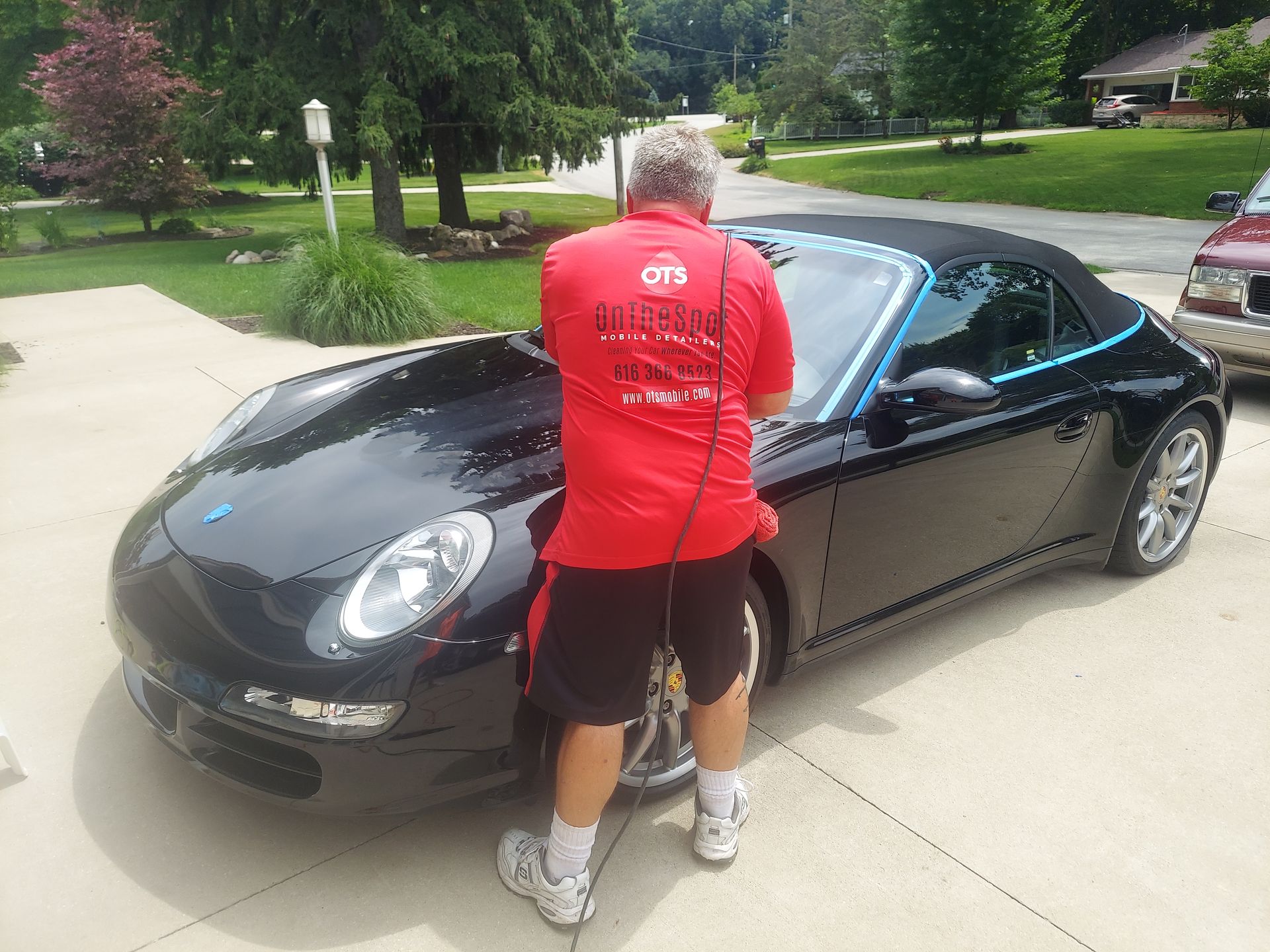
Weather is a cost driver in disguise. Hot, dry wind accelerates product flash times and complicates panel control. Cold weather extends cure times and can force tenting or portable heat to meet product temperature windows. Pricing accounts for the added equipment and the slower workflow.
Why ceramic coating quotes seem all over the map
Ceramic coating is a category, not a single thing. Product chemistry, warranty structure, surface prep, and application environment shape the quote as much as the brand name on the box.
Preparation dominates the labor. A proper coating job starts with a thorough wash, iron decontamination, clay, and at least a one-step polish to level oxidation and remove fillers. Many vehicles benefit from a partial or full correction before coating, since coatings lock in the surface as-is. A two-day coating appointment might include a full day of prep and polishing and a second day for final wipe-downs, application, and post-application inspection.
Product cost is non-trivial. A professional-grade ceramic costs far more per milliliter than a consumer kit, and it often requires specific toppers or primers. Coatings for interior coating wheels and high-temp surfaces carry their own costs. The margin must also cover failed towels, applicators, and the inevitable sacrificial pads used for tight areas.
Environment matters. Mobile teams must create stable conditions on-site or decline locations that risk a bad cure. That can mean pop-up canopies, sidewalls, lighting, and portable climate control for humidity and temperature. When we coat at On the Spot Mobile Detailers, we prefer garages with adequate space and ventilation, and we block extra time to account for variable flash times in the wild. That time shows up in the quote because skipping it is a false economy.
Warranties can be confusing. Some brands require annual inspections or toppers to keep a multi-year warranty active. That is neither good nor bad, but it carries a maintenance expectation and a cost that should be explained. A three-year coating with required maintenance may ultimately cost more than a robust two-year coating with no inspection requirement. Sophisticated clients often choose performance and honesty over a big number on a brochure.
Paint correction: enhancement vs. true correction
Paint correction pricing hinges on goals and paint type. Not all clear coats respond the same. German clear coats tend to be harder, Japanese clear coats tend to be softer, and American trucks can swing both ways depending on plant and year. Soft paint marrs easily and finishes beautifully with mild abrasives. Hard paint requires longer sets and heavier compounds for meaningful defect removal.
Enhancement, often called a one-step, aims for a major bump in gloss with modest defect removal. It is efficient and budget-friendly. True correction is slow work with frequent test sections, different pad and polish combinations, and careful defect mapping under multiple light sources. The extra hours are not fluff, they are the craft.
At On the Spot Mobile Detailers, we document a test panel during estimates on correction jobs. We measure paint with a gauge where appropriate, photograph before and after on a representative panel, and agree on a target. Getting alignment up front avoids scope creep mid-job and keeps the price honest.
Interior work: the quiet equalizer
Interiors can outstrip exteriors for labor, especially in family vehicles. Extraction passes should be kept to the minimum effective, because over-wetting creates wicking and odor issues. Leather cleaning and protection vary widely depending on the finish; most modern automotive leather has a protective coating that responds better to a gentle cleaner and a water-based interior coating than to heavy conditioners meant for aniline leather.
Pricing for interior coating usually depends on surface count and geometry. Steering wheels, shift knobs, high-use bolsters, and touchscreens benefit from protection. Door cards and center consoles with textured plastics collect skin oils and dust. Coating them buys easy maintenance. The cost reflects careful masking and even application on irregular shapes, not just the milliliters used.
Stain and odor remediation should be quoted as separate projects when the source persists. Milk spills under seats, water intrusion, or chronic smoking requires targeted enzyme work, panel removal, and time. Bundling those into a standard interior detail leads to frustration on both sides.
Headlight restoration: small job, big delta
Headlight restoration seems simple until you factor in UV stability. A quick sand-and-shine will look good for a month or two, then haze returns if the lens is not properly sealed. Pricing should account for abrasive steps up through finishing papers or discs, a true UV-stable coating or film, and the skill to feather edges without hitting adjacent paint.
The location drives difficulty. Headlights that tuck under flared fenders force awkward hand positions and more masking. If the lens has internal crazing, only replacement will solve it. A responsible quote includes the possibility that a full fix is not achievable if the damage lies beneath the outer coating.
Wheel coating and brake-dust realities
Wheels live a harder life than paint. High heat, corrosive dust, and road grime demand chemistry that can take abuse. Wheel coating costs more than a simple sealant because the prep includes iron removal, tar removal, and sometimes wheel removal for full access. Intricate designs and inner barrels add time. For owners with performance brakes or who hate scrubbing, the cost pays back quickly in lower maintenance.
Some wheels are beyond safe revival without refinishing. Clear coat failure, rash, and heavy pitting need a wheel specialist. Good mobile teams, including ours at On the Spot Mobile Detailers, call this out early and steer clients toward repair before coating.
Marine and RV detailing: a different scale, a different substrate
Marine detailing and rv detailing add size, height, and substrate differences that separate them from car detailing. Gelcoat oxidizes differently than automotive clear. Compounding a chalky hull or RV cap pulls dust and requires aggressive pads and rotary technique. The jump in square footage and ladder work alone doubles or triples the labor estimate compared to a car of similar length. Product consumption follows. Expect a marine detailing or RV quote to be framed in day rates or per-linear-foot pricing with clear definitions for oxidation level.
Site conditions matter a lot here. Marina access rules, shore power, water supply, and weather windows drive scheduling and price cushions. Mobile crews build that into the estimate because a gusty day on an open dock can stall work and waste product. The same goes for campground restrictions on generators and water runoff.
Residential coating: what that phrase usually means
Residential coating often refers to ceramic coating performed at a client’s home rather than at a shop, or to protective coatings applied to residential surfaces like garage floors, though in the detailing world it usually means the former. The practical difference is environment control. When we perform a residential coating service at On the Spot Mobile Detailers, we vet the garage for space, lighting, temperature, and dust control. We bring sidewalls and lighting to close the gap between a mobile setup and a fixed bay. Pricing reflects the extra equipment, slower deliberate pace to avoid dust capture, and the post-coating care walk-through that sets clients up to maintain the finish.
How add-ons stack without bloat
Add-ons should solve a problem, not pad a ticket. Engine bay cleaning is a good example. On modern cars with sealed bay plastics, a careful wipe-down and dressing can elevate a detail. On older cars with sensitive connectors, water risk may outweigh the aesthetic benefit. Fabric protection makes sense in family haulers and ride-shares. Glass coating helps in winter climates with salt and slush. Each has a time and place.
A smart quote shows how add-ons interact. If you are buying a ceramic coating for paint, wheel coating is often discounted in time because the prep overlaps. Conversely, adding headlight restoration to a wash may require dedicated masking and sanding time that does not cross over. Transparency keeps expectations aligned and reduces the temptation to cut corners to hit a bundled price.
On the Spot Mobile Detailers: pricing shaped by site work and scope
Two jobs, similar on paper, can end up worlds apart. We once quoted a pair of black midsize SUVs of the same model year. The first lived in a garage and saw touchless washes. It needed light paint enhancement and a two-year ceramic coating. Full ticket: one technician, one long day.
The second lived under trees, saw automated brushes, and wore dealer-installed vinyl on the roof. Iron deposits peppered the paint, the vinyl had embedded sap, and the wheels were coated with aged tire slime. The client wanted a three-year coating and to keep the vinyl. We added time for safe sap removal, vinyl-friendly cleaners, extra decon, and masked edges to avoid polish staining. Same model, very different scope. The price followed the labor, not the badge.
At On the Spot Mobile Detailers, mobile detailing is not a flat-fee commodity. Our estimates begin with a thorough walk-around, questions about maintenance habits, and a clear definition of goals. It is common for a client to assume they need multi-step paint correction when a careful enhancement will meet their aesthetic target while avoiding unnecessary clear coat removal. Guiding those decisions protects both the car and the bill.
Where the money goes: a realistic breakdown
For a mid-tier full detail on a midsize SUV that includes wash, decon, clay, interior deep clean, one-step polish, and a six-month sealant, a typical internal cost profile looks like this:
- Labor time: 6 to 9 hours depending on condition and options, with two techs overlapping for efficiency on wheels and interiors. Materials: $25 to $70 in shampoos, decon chemicals, polishes, sealants, dressings, and miscellaneous pads and towels that will be retired after the job. Travel and setup: 45 to 90 minutes combined, depending on location and site complexity. Overhead: van fuel and maintenance, insurance, equipment depreciation, disposal fees where required, and card processing.
Coating jobs shift the profile. Materials jump, labor stretches over two days with cure windows, and risk management sharpens. The price rises because the inputs rise, not because a label changed.
Practical ways to influence your price without compromising results
Clients often ask how to keep a detail within a certain budget. There are levers that preserve value.
- Decide your priority. If you care most about a clean, healthy interior, put your budget there and opt for a maintenance wash outside. If you want long-term exterior protection, fund surface prep and a quality ceramic coating, then keep interiors to a tidy. Improve condition before the appointment. Remove personal items, shake out mats, and do a quick trash pass. This unlocks minutes that move to cleaning rather than organizing. Be honest about timelines. If you have a show or sale date, say so early. Last-minute rushes are the enemy of fair pricing. A sensible schedule reduces overtime and risk premiums. Embrace maintenance. After a correction or coating, regular mobile maintenance washes cost far less than periodic rescues. Protected wheels and coated paint clean faster and safer, paying back the initial spend over time. Choose fit over flex. If your garage enables coatings and your schedule is flexible, your detailer can pick the best weather window. That stability reduces the hidden costs of working in marginal conditions.
How quotes are built, line by line
A detailed quote should read like a plan. It lists the vehicle, the scope for exterior and interior separately, the target finish level for paint (enhancement or correction), the products or protection types planned (sealant vs. ceramic coating, interior coating for high-touch surfaces, wheel coating), prep steps, site requirements, and estimated time on site. It also flags variables that may add time, such as heavy pet hair, sap, or water spotting, and how those will be handled if discovered mid-job.
At On the Spot Mobile Detailers, we include a brief care guide with coating or correction packages. It outlines the first-week handling, wash methods, and product compatibility. This documentation is part of the service, and it explains some of the price, because the work does not end at the curb when the van pulls away.
Edge cases that change the calculus
Matte paint requires a different playbook. It cannot be polished the way gloss paint can, and coatings must be matte-safe or you risk a sheen change. Prices can be higher because fewer products are suitable and mistakes are costly.
Aftermarket wraps and paint protection film vary by brand and age. Some films stain or haze under aggressive chemicals. Coating over PPF is an option, but only with compatible systems. Quotes should specify whether film is present and how it will be treated.
Classic cars bring unknowns. Resprays of varying quality, thin single-stage, and trim adhesives that do not like modern chemicals force slower, more cautious work. Pricing reflects that caution.
Fleet work introduces scale. Repetition brings efficiency, standardized expectations, and route density that lowers travel overhead. Pricing can be lower per unit, but only when scope is consistent and vehicles are maintained on a schedule.
What a fair price feels like from both sides
From the client’s side, a fair price is one that aligns with the car’s needs and the owner’s goals, explained in plain language. It includes contingencies for known variables and leaves room for informed decisions if surprises surface. It should never rely on mystery or inflated product claims.
From the operator’s side, a fair price covers the hours actually needed, the chemicals and disposables consumed, the risk taken, and a sustainable margin that keeps good technicians in the industry. It respects the reality that mobile detailing includes logistics that a fixed shop does not face.
On the Spot Mobile Detailers has learned to price in a way that protects the work and the relationship. We do not quote a coating for a driveway at noon in July without a plan for shade and temperature control. We do not promise headlight miracles where internal damage exists. We do not bury the difference between a one-step and true correction. Those choices shape the number you see, and they lead to results that last.
Final thoughts for navigating mobile detailing services
Mobile detailing thrives on clarity. Know the condition, define the goal, and choose the service that meets both. Resist the idea that a higher price is always a better result, or that a bargain signals clever shopping. The right quote comes from a technician who can explain where the time will go, what the protection will actually do, and how site conditions will be handled.
Whether you are booking a quick tidy for a commuter, a full paint correction and ceramic coating on a weekend car, or marine detailing on a chalky hull, the logic behind the price is the same. Size, condition, finish target, materials, environment, and risk. When those pieces are put on the table, you will see why some jobs take a morning and others take two days, and you can choose with confidence.